A First Visit to a New Ground: Look Beyond Your Seat
A first visit to a new ground feels less rushed when you learn its architecture, landmarks and atmosphere, from the street-facing stand to the far roof.
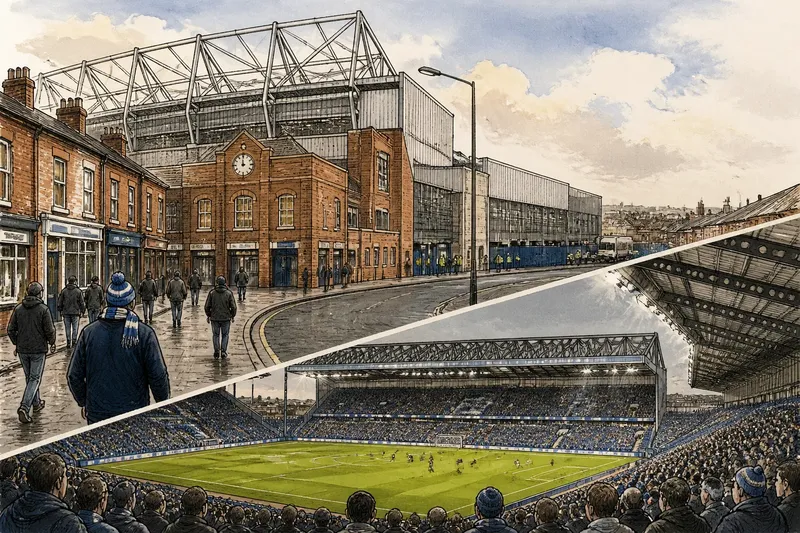
The roof appears above the terraced shops, then vanishes as the street bends towards the ground. On a first visit, that changing view can tell you as much about a stadium as the seat number on your ticket. Look at how the building meets its neighbourhood, what its materials reveal and how its shape frames the match.
What can the stadium’s exterior tell you?
Notice the difference between the ground’s public face and its working edges. A main stand may present brickwork, stone lettering or a broad glazed frontage, while the sides behind the goals are more plainly built. Those contrasts can reflect different building periods, later extensions or the distinct roles of each stand.
Look for details that give the stadium its character: a clock above an entrance, old club lettering, a roof truss visible from the pavement or a newer upper tier rising behind an older façade. Treat each as a clue, not a complete history. A commemorative plaque or dated sign can help explain a feature, while the club’s heritage material may offer more context.
Take in the whole elevation before focusing on individual details. A stand that seems modest from the street may dominate the view from the pitch, and an enclosed roof can make a ground feel very different from one with open corners.
How does the stand shape the view?
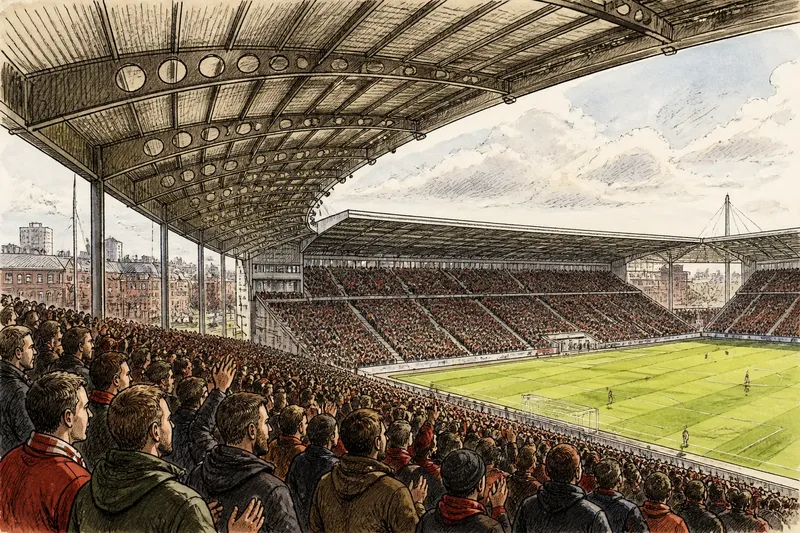
Once inside, notice how the roof, tiers and corners frame the playing area. A steep stand can make the pitch feel close; a broad lower tier can create a long, continuous sweep of seats. Roof supports, lighting rigs and open corners also affect what the stadium looks like from different parts of the bowl.
Consider where the old and new parts meet. If an upper tier sits above a preserved lower stand, compare their materials and alignment. The join may show how the ground has grown while keeping a recognisable shape, though a visible seam alone cannot tell you when or why the work was done.
Look beyond the nearest rows to the opposite stand. Its lettering, roofline or exposed steelwork can become the view that stays with you, especially when the crowd fills the frame.
Which details are worth noticing on a first visit?
- Check for historic lettering or a dated plaque; if it identifies an earlier phase, look for a matching feature elsewhere, and if it does not, treat the detail as decoration rather than evidence.
- Check whether the roof covers the corners; if it forms a continuous enclosure, notice how it frames the bowl, and if corners remain open, look at how the stands meet the sky.
- Check for changes in brick, cladding or seating between tiers; if materials or alignments differ, look for a visible join, and if they match, note how the stand reads as a single composition.
- Check where the main stand sits in relation to the pitch; if its roof and frontage dominate the exterior, compare that with the view from the opposite side, and if another stand is more prominent, note how the ground’s approach changes the impression.
- Check for roof trusses, floodlight frames or exposed supports; if they are visible, observe how they cross the skyline, and if they are concealed, focus on the roof’s outline instead.
- Check for a memorial, mural or club emblem on public-facing walls; if its subject is clear, connect it with the ground’s identity, and if its meaning is uncertain, use the club’s published heritage information rather than guessing.
How can you read the ground’s history without guessing?
Start with what the building itself shows: changes in brick colour, a blocked opening, a newer tier set above older seats or a stand that differs sharply from its neighbours. These observations can suggest alteration, but they do not establish a date or motive by themselves.
For firmer context, look for official stadium histories, heritage displays or plaques. Compare the information with the parts of the ground still visible to the public. If a detail is not explained, leave it as an open question rather than turning a visual impression into a claim.
Say you enter a ground with a brick lower tier and a metal-clad upper stand. You note the material change, then read a nearby club display that identifies the upper tier as a later addition. The result is a specific observation supported by the venue’s own account, rather than a date inferred from appearance alone.
What do visitors often ask about stadium design?
Why do stands look different from one another?
Stands may have been built or altered at different times, or designed for different capacities and uses. Look for contrasts in materials, rooflines and seating levels, then check an official source before attaching a history to them.
What is a stadium roof truss?
A truss is a structural framework that helps support a roof. From a public area, you may see its beams crossing above the seats or along the roof edge.
How can I tell whether a feature is original?
Appearance alone is not enough: a new feature can echo an older design, and repairs can change original materials. Look for a plaque or official stadium history, and keep uncertain details as questions.
Can I explore every part of the ground?
No; access depends on the venue, your ticket and matchday arrangements. Stay in public areas, follow the ground’s directions and ask staff before entering a closed or restricted section.
How can you keep the experience memorable?
Choose a few architectural details to notice rather than trying to catalogue the whole ground. A roofline, a change in brickwork and the view across to the far stand are enough to give your visit a visual thread.
On the journey home, remember how the stadium first appeared between the surrounding buildings. That approach can become part of your mental picture of the ground, alongside its stand names and the view from your seat. For a first visit to a new ground, noticing those changes in scale and shape makes the architecture easier to recognise next time.