The Empty-Stadium Myth: A Ground Is Not Just Its Crowd
The empty-stadium myth overlooks how layout, materials and routines give a ground its character before anyone arrives. Learn what to notice on a quiet visit.
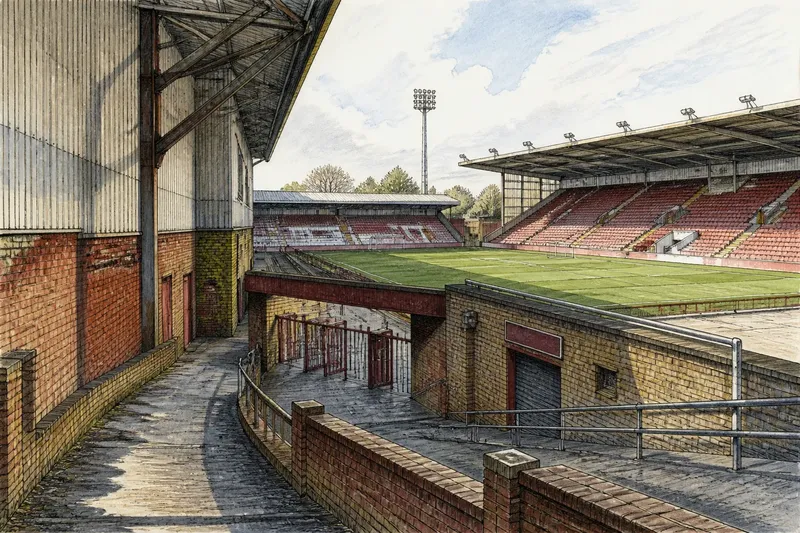
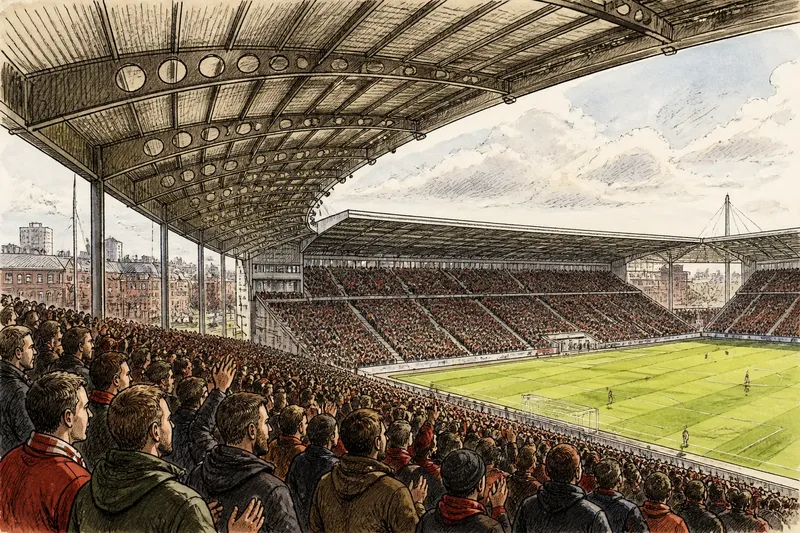
On a quiet morning, a stadium can already tell you where matchday will gather. A narrow approach bends towards a gate; a bank of seats turns towards the pitch; worn paint marks the route stewards and players use. The empty-stadium myth—that a ground has no character without its crowd—misses how these choices shape the experience before the first supporter arrives.
What you should look for depends on why you are there. A visitor interested in architecture needs different clues from someone studying club heritage or planning a matchday visit. Use the situation that fits you, and treat the ground as a place organised for people, not a shell waiting to be filled.
What can an empty ground tell an architecture visitor?
If you are visiting to understand design, begin with how the building directs movement. Stand outside the entrance and follow the visible route with your eyes: where does the path narrow, where can people pause, and when does the pitch first appear? These transitions reveal the intended sequence of arrival more clearly than a single view from a seat.
Then look at how sections meet. A continuous stand may read as one sweeping structure, while distinct blocks can make the ground feel assembled in stages. Note changes in roof height, support columns, aisle openings and the edges where old and newer construction touch. A change in material or alignment can be a clue to a different building phase, though it should not be treated as proof on its own.
Materials also establish a venue’s visual character when the seats are vacant. Brick, exposed concrete, painted steel, timber and translucent roof panels each catch light and weather differently. Look for repairs and protective coatings as well as original surfaces: practical maintenance becomes part of the place’s visible texture.
If you want to draw or photograph the architecture, pick a viewpoint that makes a relationship clear rather than trying to capture everything. A sketch of how a roof meets a stand, or a photograph showing the approach line towards an entrance, can record more than a broad image of the whole pitch.
How should a heritage-minded visitor read the ground?
If your interest is heritage, look for traces of adaptation rather than assuming the oldest-looking feature tells the whole story. An uneven junction, a blocked opening, a change in seat form or a new barrier beside older masonry may show how a venue has been altered to serve changing needs. The useful question is not simply “How old is this?” but “What has this part been asked to do?”
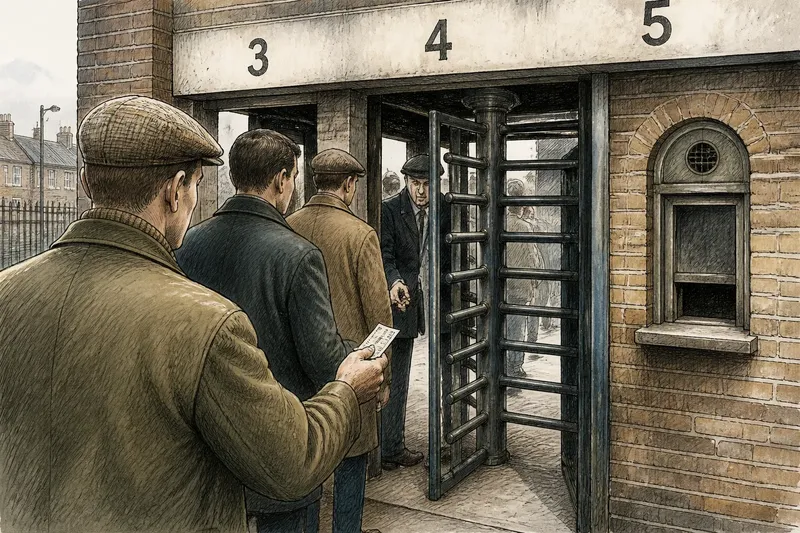
Notice which elements are repeated and which are treated as markers. A crest above a gate, a named stand, a particular colour on the seating or a retained turnstile can help people recognise the ground as their club’s place. Those signs matter alongside less decorative features: a route to the away section, a service entrance or a sheltered waiting area can hold meaning through repeated use.
Say you visit a ground whose north stand has a newer roof attached to an older brick base. You could note the visible seam, compare the materials and ask whether the stand’s present role differs from what its older form suggests. The expected result is a more precise account of change, not a firm date or a complete history; those claims need reliable records.
For a careful heritage visit, write down what you can observe separately from what you infer. A small note such as “concrete stair meets brick wall; paint differs above the landing” is more useful later than an unsupported claim that the area was rebuilt for a particular reason.
What changes if you are preparing for matchday?
If you are deciding how to approach a match, an empty or quiet visit can help you understand the ground’s routes. Identify the entrance serving your ticket, the direction of travel from the nearest public approach and the places where routes appear to split. A map or the venue’s visitor information can clarify details that are not visible from outside.
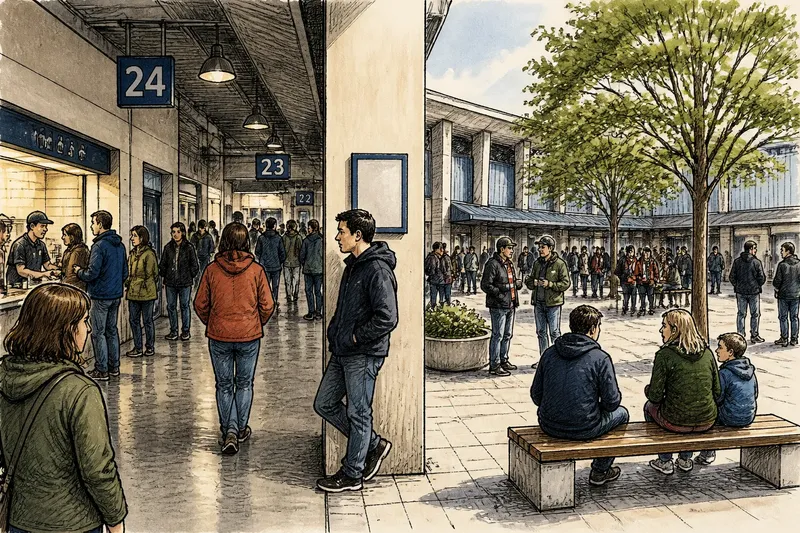
Look at how the layout may shape the gathering, without treating the crowd as a uniform mass. A broad forecourt offers room to meet and wait; a tighter approach concentrates movement near the gate. Separate entrances can divide the arrival of home and away supporters. These features influence where people pause, meet and move on, but the actual atmosphere also depends on the event, the people attending and the arrangements in place that day.
If you are attending with someone who needs a calmer route or accessible facilities, check the venue’s current guidance rather than relying on a general impression of the building. Ask about step-free access, companion arrangements, seating routes and available assistance before travelling. A visible ramp or lift does not, by itself, tell you which entrance is open or whether it serves your section.
At the ground, follow signs and staff directions, especially where routes change for an event. The architecture may suggest a shortcut, but a closed gate or managed one-way route takes precedence.
Which clues matter for each kind of visit?
- Architecture visit: Trace sightlines, circulation routes and the meeting points between roof, stand and pitch. This fits when you want to understand how the venue guides movement and attention.
- Heritage visit: Record visible changes, retained features and signs of repair. This fits when you want to separate the ground’s physical evidence from stories that need documentary support.
- Matchday preparation: Locate your entrance, likely route and any relevant access information. This fits when a smooth arrival matters more than a broad architectural survey.
- Quiet observation: Watch how light, weather and routine affect a place before a crowd gathers. This fits when you want to see how the ground functions as a working venue between events.
- Sketching or photography: Choose one relationship—such as a stand meeting a concourse or an entrance aligned with the pitch—and record it clearly. This fits when a focused image or drawing will be more useful than a general view.
Make the choice before you arrive: a visit with one clear question is easier to read than an attempt to notice everything.
What questions do visitors often ask?
Does an empty stadium have an atmosphere?
It can have a distinct mood created by scale, light, surfaces and the sounds of an operating venue. That is different from matchday atmosphere, which depends on people and the event as well as the building.
What should I notice first on a stadium visit?
Start with the route from the approach to the entrance, then notice when the pitch becomes visible. This gives you a simple way to understand how the ground handles arrival and directs attention.
Can the building reveal its history without a guide?
You can observe alterations, material changes and retained features, but observation alone rarely establishes when or why they appeared. Record what you see and use venue records or knowledgeable local sources to check the story.
Is a quiet visit useful if I am going to a match later?
It can help you recognise entrances, stand divisions and the broad shape of the approach. Matchday routes and access arrangements may differ, so use current event information when planning the actual journey.
How do routines become part of a ground’s identity?
A venue is shaped not only by its plan but by repeated tasks. Groundskeepers prepare the playing surface; staff open and secure particular routes; stewards direct movement; maintenance teams keep exposed materials serviceable. These routines leave small, observable signs, from protected corners to orderly service areas.
Even when no match is under way, the place may be in use. Deliveries, cleaning and maintenance occupy spaces that spectators rarely notice, yet those spaces connect the public face of a stadium to the work that keeps it functioning. If you are observing from a public area, stay within permitted routes and do not enter service or restricted spaces.
The most useful way to challenge the empty-stadium myth is to ask what the ground is already doing. Its structure sets routes and views; its materials carry the marks of use; its routines prepare the shared space for what comes next. Attend to one of those layers, and the venue’s character becomes visible before the crowd takes its place.
On your next visit, choose a single detail to follow from entrance to stand: a change in floor surface, a line of sight or a repeated sign. That small thread can show how the building anticipates its people without pretending to replace them.